



About the service
Microsoft Dynamics 365 Finance and Supply Chain Management is an ERP solution hosted on the Microsoft cloud, featuring continuous updates instead of major upgrade projects, Copilot integration for financial and operational processes, analytics via Power BI and Microsoft Fabric, and seamless workflows directly within Excel, Teams, and Outlook. For companies currently on SAP ECC that are facing a reimplementation anyway, this is an opportunity to build the next decade on a platform that evolves on its own.
ANEGIS guides organizations through the transition from SAP ECC to Dynamics 365, either in full or in stages, starting with specific subsidiaries or countries. You decide on the approach based on a comparative environment analysis before purchasing any licenses, and we manage the migration to ensure risks are mitigated at every step: from balance reconciliation to the go-live contingency plan.
+13 years
+125
90%
The end of SAP ECC support is a deadline for a decision, not a reason to panic
The question isn't whether to act, but what to choose and when to start, so you can make your decisions with peace of mind.

Standard ECC support ends on December 31, 2027
S/4HANA is a reimplementation, not an upgrade
ABAP customizations require a rebuild anyway
The later the decision, the fewer the options
Why companies are moving from SAP to Dynamics 365
There are usually three main drivers behind the decision to switch platforms. They all boil down to one thing: the system should drive the business, not consume its resources.
Month-end close in days, not weeks
A single data model, automated reconciliations, and on-demand reporting cut reporting cycles from weeks to days. Your finance team stops spending time compiling data and starts analyzing it - a shift that leadership will notice as early as the first quarter after go-live.
One platform instead of a different system for every country
Groups consolidate fragmented environments into a single instance, featuring shared master data and financial consolidation without the need for manual reconciliation. Adding a new company or entering a new market becomes a simple configuration within the existing system rather than a separate implementation project.
Shift your budget from maintenance to growth
Servers, databases, backups, and recurring upgrade projects disappear from your expense list because the cloud handles them with updates included in the subscription price. The money and IT team time previously spent on maintaining the status quo can now be redirected toward growth.
From SAP environment analysis to a stable go-live on Dynamics 365
SAP environment assessment
Inventory of modules, ABAP customizations, integrations, and data; this can be performed even before purchasing licenses.
Comparative analysis and strategic decision-making
Dynamics 365, S/4HANA, or staying on ECC: fit-gap analysis and recommendations based on data, not assumptions.
Target process mapping
Process workshops: maximizing system standards and implementing extensions only where they provide a competitive advantage.
Data migration
Mapping the SAP data model to the Dynamics 365 model, including profiling, cleansing, and balance reconciliation at every stage.
Integrations and extensions
Rebuilding integrations (EDI, banks, warehouse and production systems) and developing extensions to replace ABAP customizations.
Testing and mock cutover
Functional testing and mock cutovers with full data reconciliation prior to the production launch.
Go-live and stabilization
Phased rollout, for example, starting with finance, followed by operations and subsequent subsidiaries, including a contingency plan and support during the initial weeks.
Controlled migration from SAP ECC
Why Dynamics 365 is a strong choice for the next decade
It’s not about running away from ECC. It’s about spending the next ten years on a platform that evolves on its own and works seamlessly with the rest of your tools.

The cloud that updates itself
Dynamics 365 operates on a continuous update model: new versions arrive several times a year, included in the subscription price, with no need for upgrade projects. The reimplementation you are planning could be the last one in your company's history. You also eliminate the entire layer you currently maintain: servers, databases, backups, and patching.

AI built into your daily work
Copilot works directly within financial and supply chain processes: it provides suggestions for reconciliations, forecasts demand, and answers questions about data in natural language. It is a standard platform feature developed by Microsoft, not a separate AI project with its own budget.

ERP in an environment your team already knows
Single sign-on via Entra ID, working with system data directly in Excel, and handling notifications and approvals in Teams and Outlook. Adoption and training are faster because no one has to learn a new environment from scratch - they get ERP functionality within the tools they have been using for years.

Analytics without building a data warehouse
Data from Dynamics 365 flows into Microsoft Fabric and Power BI without the need for a separate integration project. Controlling teams work with real-time data, combine it with other company systems, and build reports independently instead of waiting for IT.

A cost model you can see on your invoice
A per-user subscription model with lower-cost licenses for occasional roles and shared devices. No database licenses, no infrastructure investment, and no need to set aside a budget for a major upgrade in a few years.

Polish compliance and development without debt
KSeF, JPK CIT, and the Polish Localisation Pack are ready-to-use ANEGIS solutions, updated in line with regulatory changes. You can address new requirements using Power Platform extensions outside the system core, preventing technical debt from accumulating.
Proven performance, reliable results
We work according to our proven methodology, based on Microsoft Success by Design and aligned with the FastTrack approach. We manage the project in stages, with decision gates and architecture reviews, ensuring risks are identified early and decisions are well-informed.
- Pre-purchase analysis. SAP environment assessment, fit-gap analysis, and a no-obligation quote. The direction is decided right at the start.
- Iterative data migration. From the development environment through the sandbox (UAT) to production, with validation and balance reconciliation at every step.
- Trial run before launch. We eliminate risk before it reaches production.
- Phased go-live and stabilization. Launch with a contingency plan and transition to a continuous update model.
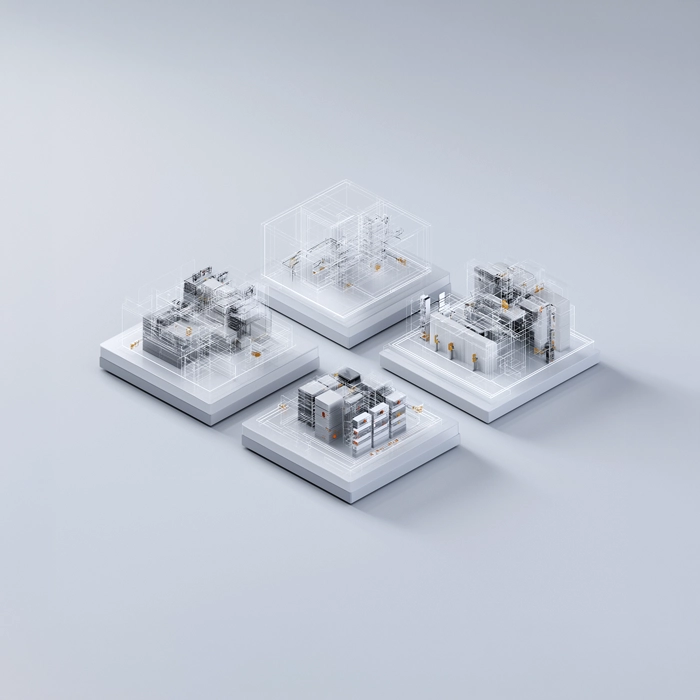
Migration without the stakes: how we de-risk your project
The biggest barrier to changing an ERP system is not technology, but the fear of business disruption. That is why risk management is not just a chapter in our methodology, but the foundation of the entire project.
Decisions made before budgeting
We conduct environment analysis, fit-gap assessments, and cost estimation before any licenses are purchased. We mitigate the biggest ERP project risk - choosing the wrong direction - at the stage where corrections are least expensive.
Phased approach instead of a big bang
We migrate in phases: starting with finance, then operations, followed by individual subsidiaries and countries. Each phase has its own scope, testing, and go-live criteria, ensuring that an issue in one area does not halt the entire company.
Data reconciled to the balance
We perform multiple data migration rehearsals in test environments, verifying after each run that balances and documents in the new system match SAP down to the last cent. We conduct a full dress rehearsal before the production launch, ensuring go-live day is a practiced routine rather than an unpredictable premiere.
Coexistence with SAP during transition
Dynamics 365 can operate alongside SAP for as long as your plan requires, using integrations, shared master data, and consolidation. In a two-tier model, headquarters can remain on SAP while subsidiaries transition to the new platform.
ECC history accessible post-migration
We migrate historical data from your legacy system to the Microsoft Fabric analytical layer, where it remains available for reporting and auditing. You no longer need to maintain a decommissioned SAP instance just to access past records.
Post-launch support and contingency planning
We manage the go-live with a contingency plan and enhanced support during the initial weeks. Once stabilized, the system shifts to a continuous update model, ensuring the risks associated with major version upgrades never return.

What about the team that knows SAP today
Migration is about changing tools, not replacing people. Your team's knowledge of company processes is an asset in this project, not a cost.

Key users become process owners
The people who know your processes inside out co-design them in the new system during workshops. They are the ones who know best what really works and what has been bypassed for years.

IT shifts from maintenance to development
Instead of managing servers and databases, your technical team builds extensions and automations on the Power Platform. Since Microsoft ecosystem skills are widely available on the job market, your team grows along with the platform rather than shrinking within a niche.

Training before, not after, the launch
ANEGIS provides role-based, on-the-job training using your company's data before the system goes live. The familiar Microsoft 365 environment shortens the learning curve, as the interface is already a known world to everyone.

We handle the initial support
In the first weeks after launch, the ANEGIS team works alongside yours: providing enhanced support, fast-track ticketing, and systematic knowledge transfer. We stay until your people take full ownership of the system.


.svg)

Why it is worth entrusting your SAP ECC migration to the ANEGIS team

Reimplementations are our daily routine
We guide organizations from Dynamics AX to Dynamics 365, which requires the same discipline: data migration between different models, process reconstruction, and a secure go-live without business disruption.

Enterprise scale in practice
Dynamics 365 implementations for organizations on a scale comparable to SAP installations: international groups, retail chains with over a thousand stores, and multi-entity financial structures.

Polish compliance through our own products
We develop KSeF, JPK CIT, and the Polish Localisation Pack in-house, so compliance doesn't depend on third-party vendors.

Presence in Poland and the UK
Local support and international rollouts handled by a single team.

Fact-based recommendations
We conduct our comparative analysis with integrity: if the data points in a direction other than Dynamics 365, we will tell you straight.

An alternative to S/4HANA? Three paths from SAP ECC
There are three viable paths from ECC. Each makes sense in a different situation, which is why the first step is analysis, not committing to a direction.

Migration to S/4HANA
Staying within the SAP ecosystem: redeployment on a new architecture, typically using the RISE model. A natural choice when processes are deeply integrated with SAP industry solutions and the organization accepts the new licensing model.
Staying on ECC
Extended paid support until 2030 at the latest, or third-party support. This is delaying the decision, not avoiding it: the scope of support is shrinking, and compliance with new regulations becomes your responsibility.
Reimplementation on Dynamics 365
The same implementation effort as with S/4HANA, but with a different target platform: cloud-based, with built-in AI, Power Platform extensions, and licensing that doesn't require a database swap.
When migrating to Dynamics 365 makes the most sense
Not every company on ECC should switch platforms. The business case is strongest when you meet several of the following conditions.
You are already working in a Microsoft environment
If your company uses Microsoft 365, Teams, and Azure, Dynamics 365 operates on the same identity and login. The ERP integrates into tools your team already knows, including the ability to work with system data directly in Excel.
You want a predictable cost model
You pay a per-user subscription fee, with cheaper licenses for occasional roles and shared devices. You don't need to buy separate database or server licenses, and updates are included in the subscription.
You want to end the cycle of major upgrades
Dynamics 365 updates continuously, several times a year, without the need for major upgrade projects every few years. The reimplementation you are currently planning could be your last.
Your customizations need to be rebuilt anyway
Years of ABAP modifications cannot be transferred unchanged to any modern platform. Since you have to clean things up anyway, it is worth doing so where extensions are built outside the system core.
You manage a group of companies or are growing through acquisitions
In a two-tier model, the headquarters can remain on SAP, while subsidiaries and new entities can launch on Dynamics 365 in just a few months. The same logic applies to spin-offs and entering new markets.
You are concerned about the availability of specialists
The pool of Microsoft ecosystem specialists in Poland is vast, and your teams likely already possess competencies in Excel, Power BI, and Teams. Meanwhile, the SAP consultant market is becoming increasingly crowded and expensive due to the wave of migrations to S/4HANA.
What to do with ECC: a plan for the coming quarters
Regardless of the direction you choose, the sequence of logical steps remains the same. The earlier you start, the more options you keep open.
Inventory and comparative analysis
Cataloging modules, customizations, integrations, and data, followed by a fit-gap analysis for viable directions. A few weeks of work, with no licensing commitments, resulting in a clear valuation and timeline.
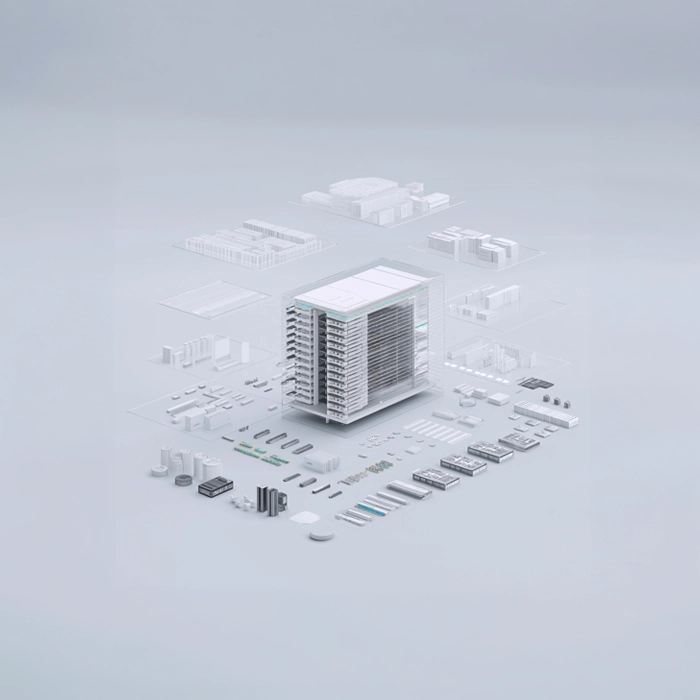
Fact-based strategic decision
Choosing the path: Dynamics 365, S/4HANA, a two-tier model, or consciously remaining on ECC for a defined period. A decision made well in advance is a decision negotiated from a position of strength, including when dealing with vendors.


Phased project delivery
Migration follows the plan from the analysis: starting with finance, moving through operations, and then on to subsequent subsidiaries. We select the scope of the first phase to ensure quick value delivery while keeping risks localized.
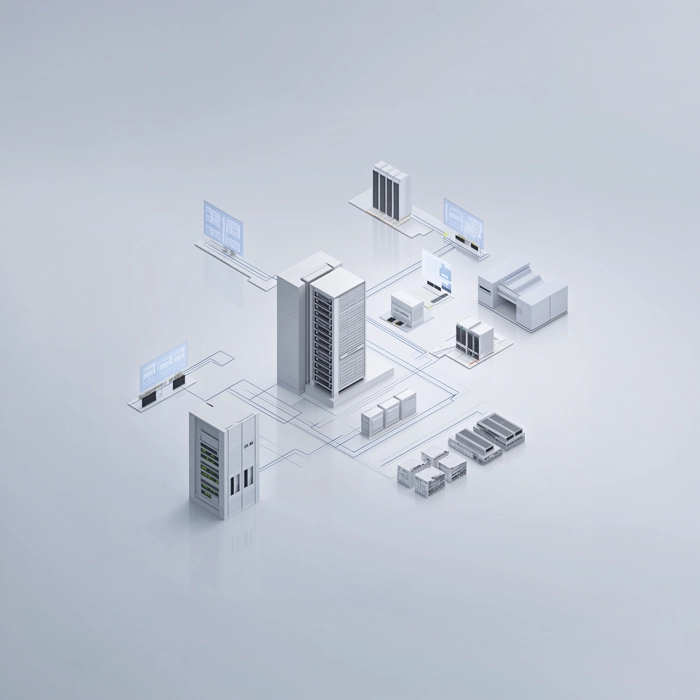
Stabilization and growth
After launch, the system enters a continuous update mode, with development keeping pace with the company: new subsidiaries, new countries, and new Power Platform extensions. All without another massive project on the horizon.

You don't have to replace everything at once
In international groups, a proven approach is the two-tier ERP model: the headquarters stays on SAP, while subsidiaries and new markets launch on Dynamics 365.
- Faster start, lower risk. A subsidiary can implement Dynamics 365 in a matter of months, without touching the central system.
- Consolidation and shared data. Company results and master data flow to the headquarters through defined integrations.
- Scaled to fit the company. Local entities get a system tailored to their processes and budget, instead of having to shoulder a corporate SAP installation.
- The natural path for 2027. By the time the decision about the headquarters is made, the organization is already familiar with the platform, and the partner knows the organization.
Controlled migration from SAP ECC
We guide organizations through the transition from SAP ECC to Dynamics 365 Finance and Supply Chain Management, either in full or in stages starting with subsidiaries. We begin with a free comparative analysis, even before any licensing decisions are made.



From the first conversation to a working system
Changing systems doesn't have to mean chaos. We guide you through five steps so that at every stage it is clear what is happening, why, and what the next step will be.
Discussion and discovery
Free consultation: we learn about your situation, goals, and constraints. No strings attached and no sales pitch.
Analysis and recommendation
We map processes and requirements, assess platform fit, and recommend the direction, scope, and approach.
Plan and decision
Schedule, budget, roles, and decision gates. You make project decisions based on facts, not assumptions.
Phased implementation
We implement step-by-step, with testing, risk control, and reviews at every milestone.
Stabilization and care
Launch with a contingency plan, post-launch support, and transition to ongoing maintenance.
Collaboration models




Frequently asked questions about migrating from SAP ECC
Do I need to migrate from SAP ECC before 2027?
Standard support for ECC 6.0 (EHP 6 to 8) ends on December 31, 2027; paid extended support runs until the end of 2030 but is limited in scope. A realistic ERP transformation project takes anywhere from over a year to several years, meaning the decision on which path to take must be made well in advance of the actual migration.
Will Dynamics 365 functionally replace SAP ECC?
Dynamics 365 Finance and Supply Chain Management cover finance, controlling, procurement, sales, warehousing, and production—essentially the FI, CO, MM, SD, PP, and WM modules. Because the data model and extension philosophy differ, we verify fit through a fit-gap analysis based on your actual processes rather than a brochure.
How does migrating to Dynamics 365 differ from migrating to S/4HANA?
The effort required is similar: both involve a reimplementation, including process mapping and data migration. The difference lies in the target platform: the licensing model, the ecosystem (Microsoft 365, Power BI, Azure), the way extensions are built, and the post-launch maintenance costs.
What will happen to our ABAP customizations?
We inventory them at the start of our analysis. Some turn out to be redundant because their functions are already covered by standard Dynamics 365 features. We rebuild the rest as extensions or Power Platform applications, keeping them outside the system core to avoid carrying over technical debt to the new platform.
Can we migrate in stages or start with the subsidiaries?
Yes. The two-tier model allows you to keep SAP at headquarters while deploying Dynamics 365 in specific subsidiaries or countries, with integration for consolidation and master data. We also carry out the migration in stages, for example, starting with finance and moving on to operations.
What happens to KSeF, JPK, and Polish compliance requirements after migration?
Polish compliance is supported by ready-to-use ANEGIS solutions: ANEGIS KSeF, ANEGIS JPK, and the Polish Localisation Pack. We develop these in-house in line with regulatory changes, ensuring compliance from day one without any reliance on third-party providers.
How does the Dynamics 365 cost model differ from SAP?
Dynamics 365 operates on a per-user subscription model: full licenses for operational roles, lower-cost options for occasional users and shared devices, with no separate database licensing or infrastructure investment required. In the SAP world, you pay for perpetual licenses with an annual maintenance fee of around 20% of their value, or a RISE bundle subscription, which combines the software, HANA database, and infrastructure into a single contract, though it does not include implementation.
Is it always worth migrating from SAP ECC to Dynamics 365?
No. If a company relies heavily on industry-specific SAP solutions, runs a single global instance for thousands of users, or has recent contractual commitments under RISE, S/4HANA or a two-tier model may be the more sensible path. That is precisely why we begin with a comparative analysis rather than by declaring a direction.
Why not S/4HANA if we already have SAP?
Staying within the ecosystem doesn't reduce the scale of the project: moving to S/4HANA is essentially a reimplementation, involving process mapping, data migration, and rebuilding customizations. Since the effort is comparable, it is worth basing your choice of platform for the next decade on an analysis of your own environment rather than on habit.
Will the migration disrupt our sales or production?
We implement the project in stages, including a pilot run and full data reconciliation before go-live. We schedule the actual cutover during a window agreed upon with the business, with a contingency plan at the ready. Launch day is a dry run of our practiced scenario, and Dynamics 365 can run alongside SAP for as long as the transition plan requires.
What about historical data from ECC during an inspection or audit?
We migrate historical data to the Microsoft Fabric analytical layer, where it remains available for reporting, monitoring, and auditing. There is no need to maintain a decommissioned SAP system just to keep access to past data.

Looking for a Microsoft partner? Let's talk about your project
Work with a team that has delivered implementations and projects for dozens of companies. Schedule an introductory call and see:
How to tailor Dynamics 365 to your company's processes, rather than the other way around
Which areas are worth automating to save time and reduce costs
Here is the step-by-step implementation process with Anegis: from analysis to post-launch support
