


2
+125
+70
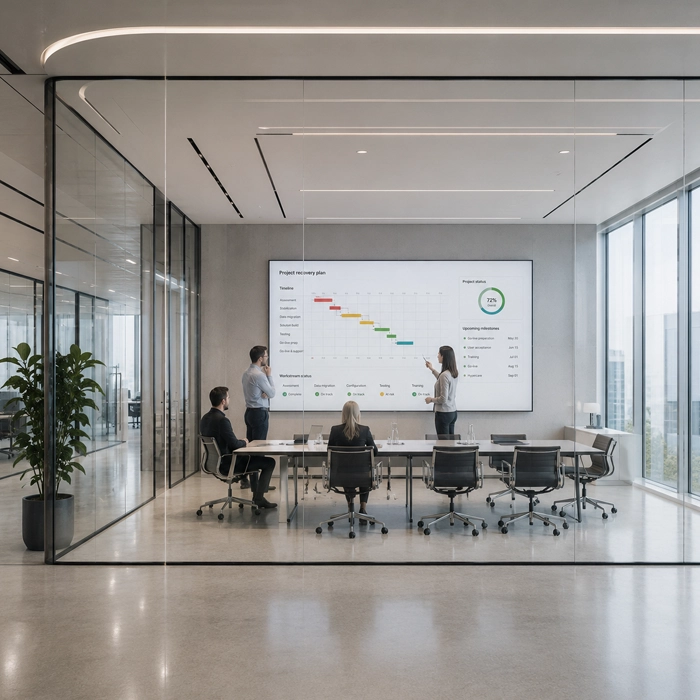
About the service
The go-live date has been moved once again. The defect list is growing rather than shrinking, the data has been migrated for the third time and still does not reconcile with the source, and consultants on the partner side keep changing. Status reports continue to state that the project is on track. Your people are performing tasks that are the partner's responsibility, and the board no longer believes the latest go-live date. In this situation, the highest cost is not the money already spent. It is every further week without a decision.
ANEGIS takes over at-risk, delayed and stalled implementations of Dynamics 365 Finance and Operations as well as migrations from Dynamics AX. We begin with a two-week audit that states clearly which elements of the solution should be retained, which should be remediated and which should be discarded, and what it realistically costs to complete the project. We then stabilise the project, remove the causes that block go-live, and lead it through to production start and post-go-live support. We can take over the project in full or work alongside your current partner as an independent reviewer. If your project is progressing but requires targeted reinforcement of expertise or capacity, the appropriate service is project support. Project recovery is for projects that have lost the ability to reach their goal on their own.
A project rarely ends in sudden collapse. Far more often, it gradually loses credibility.
The signals below recur in almost every project that reaches us for takeover. If you recognise any of them, it is worth looking at the project from the outside before the next date is set.

The go-live date has been postponed for the second or third time
The budget grows while the scope shrinks
Testing is not approaching completion
Data migrated again and still inconsistent
Integrations work in demonstrations, not under load
Your team is doing the partner's work
People on the partner side keep changing
Reports say the project is on track, and the steering committee has lost confidence
What you recover when the project is back under control
An investment that is not lost
Most of the work completed can usually be retained: configuration, part of the extensions, prepared data, trained staff. Remediation protects what you have already paid for. Restarting the project writes that value off.
An end to funding two systems at once
The existing Dynamics AX system generates maintenance, licensing and manual workaround costs, while the new system is not yet in operation. Completing the project closes the double bill.
A single, consistent view of group finances
Period close without auxiliary spreadsheets, consolidation on time, and figures the board can rely on.
Regulatory compliance within the required deadlines
Statutory e-invoicing, tax audits, mandatory reporting. A live system closes an area that a platform without vendor support can no longer handle safely.
A plan that can be defended before the board
A realistic schedule based on verified facts rather than declarations. The project sponsor regains credibility by presenting control of the situation, not another date.
A team that returns to its responsibilities
An end to resolving failures after hours. Staff receive a system on which they can do their jobs, not a project that consumes their capacity.
We'll help you with your transformation
The situations clients bring to us
Every at-risk project has its own history, but most cases fall into one of six scenarios.
A Finance and Operations implementation has stalled before go-live
Another deadline has slipped, the scope has become blurred, and the team is exhausted. You need a reliable answer as to whether and how the project can be completed.
A migration from Dynamics AX has stopped halfway
The existing system is no longer supported by the vendor, the new one is not yet operational, and the business is running on both at once.
The system has gone live but is not operating stably
Every month-end close is a crisis, users have returned to spreadsheets, and the partner has reduced its involvement since go-live.
You have lost confidence in your partner but do not want to start again
You want to know how much of the work to date can be reused before you decide to change supplier.
You need an independent second opinion
The project continues with the current partner, but the board expects an external assessment of the plan, the architecture and the risks before the next budget tranche is released.
A multi-country rollout has lost consistency between entities
Each company is running a different version of the solution, the common core has ceased to be common, and the remaining countries are waiting their turn.
The first step and the decision point
A two-week project audit that clearly establishes what has stopped working, what can be retained and what it costs to complete. A fixed price, a defined timeframe, and a result that belongs to you and that you can use with any partner.
Parameters
- Duration: 2 weeks
- Format: work with the project team, review of environments and documentation, workshops with business representatives
- Commercial model: fixed price, known from the outset
- Commitment: none; after the audit, you decide whether the engagement continues

Scope
The audit examines eight areas: scope and business processes against the original project objectives; solution design and architecture; code and extensions, in particular whether they are upgrade-safe and interfere with standard system functionality; the state of the data and the migration approach; integrations and how they are tested; test status and the defect register; project organisation, decision-making processes and escalation paths; the contract, the team and the environments. We conduct the review within the Success by Design framework, Microsoft's methodology for Dynamics 365 implementations, so that the project is measured against the model the vendor recognises as correct.


How the audit proceeds
- Opening meeting. We establish which problems are most pressing, who takes decisions and which deadlines cannot be moved.
- Review of documentation and environments. Schedule, specifications, code, data, defect register, configuration.
- Workshops with key users. We verify how the system is meant to operate in real work, not only in the specification.
- Technical analysis. Code, extensions, integrations, data quality, performance.
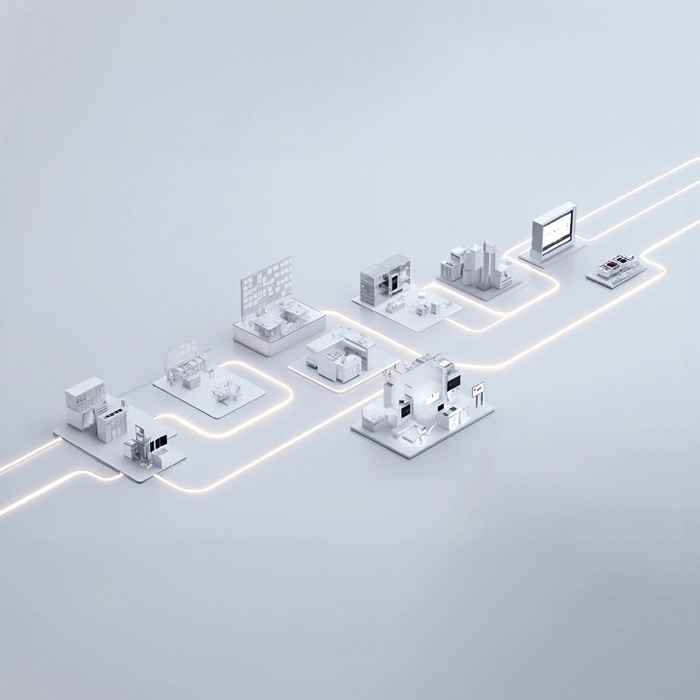
- Report and recommendation. What to retain, what to remediate, what to discard. With an estimate of cost and time.
- Presentation to the board. Findings presented in the language of business decisions, not technology.
What you receive on completion
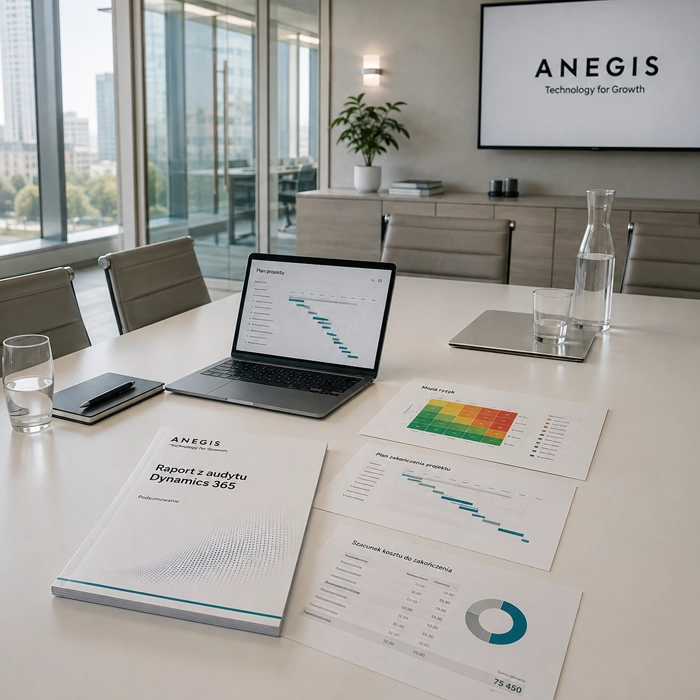
A report of key findings presented without softening the conclusions, a risk map, a recommended course of action covering stabilisation, re-planning, scope change or, in exceptional cases, reimplementation, a realistic plan to complete the project, and an estimate of the cost to completion. If the conclusion of the audit is that the project is best completed with your current partner, you will hear that too.
Let us discuss the audit



First, stop the problems from escalating
Before we begin remediation, the project must stop causing further damage. We bring order to what is blocking daily work and restore the rules for taking decisions.

Critical processes first
Period-end closing, inventory management, purchasing, order processing. We resolve issues in the order of their impact on the company’s operations, not in the order in which they are reported.

A single version of the plan
One schedule, one owner, one register of open items. The situation in which each party works from its own version of the project status disappears.

Restoring the decision-making process
We establish who decides, at what cadence and with what mandate. The steering committee returns to taking decisions rather than listening to explanations.

Early results that rebuild trust
Several visible improvements in the first weeks, so that users and the project sponsor see that something has genuinely changed.
Without severing relationships and without starting again
Taking over a project requires care: it concerns knowledge, code, contracts and relationships. We apply a procedure that protects your investment and does not expose you to an interruption in project delivery.
- What remains, what we remediate, what we discard. Every element of the solution receives one of three classifications. In most cases, a significant part of the solution remains.
- Knowledge transfer before the partner departs. A review of code, documentation and configuration, together with conversations with the existing team where circumstances allow.
- Two modes of engagement. Full takeover of the project, or work alongside the current partner in the role of independent quality assurance. You take the decision after the audit, not before it.
- Contracts and licences. We help you bring order to the formal side of the takeover: obligations arising from the current contract, licensing matters and continuity of access to environments.
- Without assigning blame. We do not produce an assessment of the previous supplier. We produce a plan to complete the project.
The most common source of problems in Finance and Operations projects
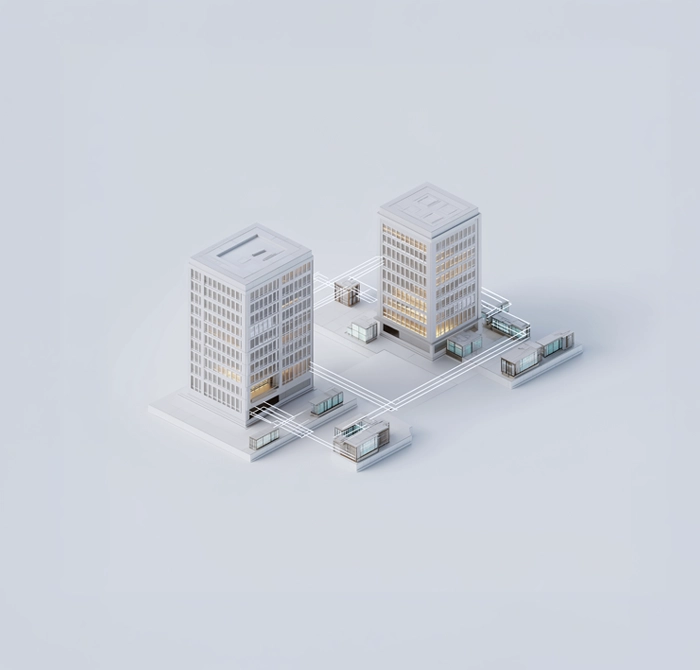
In most of the projects we take over, the problem comes down to two or three architectural decisions decisions whose effects cascade through the rest of the solution. We identify them and remove them at source.
Extensions rather than modifications to the standard
Code written in the manner appropriate to Dynamics AX, directly modifying standard system objects, breaks with every update. We rebuild it as extensions that remain resilient to subsequent releases.
Standard first
Some modifications recreate old workarounds that the new system was meant to eliminate. Wherever possible, we restore standard functionality and retain only those extensions that deliver a genuine advantage.
Chart of accounts, financial dimensions, intercompany
Three areas in which a wrong decision at the start of the project is reflected in every report. We correct them before moving on.
Integrations designed for real volumes
We test interfaces under load and on process exceptions, not only on the primary path.
The most common reason for a delayed go-live
Data is the area in which most projects come to a halt. Usually not because it is difficult, but because work on it was started too late and carried out too hastily.
- Cleansing at source, not after loading. Master data, customers and suppliers, item codes, opening balances. We bring the data into order in the existing system before it reaches the new one.
- Trial migrations with reconciliation. Every data load ends with reconciliation against the source system. Without reconciled balances, go-live does not take place.
- Migration is not a transfer of everything. We do not migrate data on a one-to-one basis. Together, we determine exactly how much history is truly required.
- Data owners on the business side. Data quality is the responsibility of business departments, not IT. We define roles in a way that remains effective long after go-live.
A date based on facts, not on expectations
We build the new schedule by working backwards from go-live: from what must work on the day of go-live, through the tests that will confirm it, to the trial cutovers that will demonstrate readiness.
- Go-live scope and post-go-live scope. We separate elements essential for launch from those that can be delivered later. These decisions are made jointly with the business and fully documented.
- Tests that reflect real work. Scenarios based on daily operations, real data, and sign-offs granted because the solution works—not because a deadline is looming.
- Trial cutovers. Before the actual go-live, we conduct full, timed cutover rehearsals. Each concludes with a list of corrections and a measured execution time.
- A go-live decision based on criteria. Go-live happens only when readiness criteria are met. Never earlier, even under pressure from project costs incurred to date.
Every week of delay may cost more than the audit
Start with a conversation that will show the actual state of your project.
Go-live does not end the recovery process
Most of the problems in recovered projects surface several weeks after go-live, when the crisis team finishes its work and the business is operating at full intensity. That is why we stay.
Intensive post-go-live support
In the first period after the start, the project team remains at your disposal.
The first month-end close together
We go through the first period close and the first consolidation with your team. This is the test that matters most.
Handover to maintenance
After stabilisation, the project passes to ANEGIS managed services or to your own team. With documentation that reflects the actual state of the solution.
Readiness for updates
We hand over the solution in a condition in which subsequent Dynamics 365 releases pose no threat to business continuity.
A system users want to use
In at-risk projects, users have usually already lost confidence in the system. Rebuilding adoption is a separate task, not a supplement to training.
- Training in processes, not in screens. From day one, we teach users how to perform their roles within specific business processes, rather than just how to navigate system features.
- Key users as allies. We involve them in testing and decision-making so they become advocates for the solution rather than its critics.
- An end to spreadsheets running alongside the system. We identify workarounds created during crises and replace them with native system solutions.
- Change management as part of the plan. Communication, timelines, and responsibilities. These are built into the schedule, not tacked on at the end.

When you do not intend to change your partner but need certainty
Not every at-risk project requires a takeover. Sometimes an independent assessment is sufficient to tell the board whether the plan is realistic before the next budget tranche is released.

Review of the plan, the architecture and the risks
An assessment free of conflict of interest, because we are not competing for the project.

A standing quality assurance role
We participate in the project's key checkpoints and report directly to the sponsor.

Go-live readiness review
An independent assessment of whether the go-live criteria are met before you take the decision.

Transition to full takeover if required
If the second opinion shows that the partner will not deliver the solution, we already understand the project and do not start from the beginning.


.svg)

Why entrust the recovery of your project to us

From Axapta 3.0 to Dynamics 365
We have worked with this system for over twenty years, across every version. We understand code written under legacy standards and know how to migrate it into modern environments where updates are released every few months.

Many projects taken over
We have taken over projects from other partners. We know the points at which implementations lose stability, because we have seen them from the inside.

Experienced specialists who stay to the end
The architect who conducts the audit also leads the remediation. We do not replace the team mid-project.

The UK and Poland in one organisation
We serve international groups from offices in the UK and Poland, including rollouts covering multiple entities.

Microsoft Solutions Partner
The highest partner status and direct access to the vendor's technical resources, including in situations requiring escalation.

The Success by Design methodology
We run projects according to Microsoft's reference framework for Dynamics 365 implementations. We measure the project we take over against this model and bring it into line with it.

An honest recommendation
If your project is best handled by your current partner, we will tell you. Our audit concludes with a decision, not a sales pitch.

Local regulatory requirements based on our own hands-on experience
Statutory e-invoicing, tax reporting, and financial localization. We maintain these solutions in-house, ensuring that any project we take over never stalls at the compliance stage.

See how we transform tech companies
BBK


BUUK Infrastructure


Eton Shirts


CTDI


Exterion Media


Georg UTZ


WPP


Westfield

TERG


S&P Polska


Saller Polbau

OSTP


Nicols

New Yorker


NCC


Global Advertising Holding

Cooperation models
- Fixed-price recovery audit: two weeks, a report, a plan and a decision, with no commitment.
- Full project takeover: we lead the remediation from stabilisation through go-live and care, in stages, with decision points.
- Independent second opinion: a standing quality assurance role alongside the current partner, reporting to the project sponsor.
- Team reinforcement: an interim project manager, architect or specialists within your team, when the problem is capacity rather than the partner.
- Post-go-live care: a stabilisation package followed by managed services.




Every week of delay may cost more than the audit
Start with a conversation that will show the actual state of your project.
See other services

Project support
We will support your team with knowledge and experience at every stage of a Dynamics 365 project, to reach your goals efficiently.

Migration from Dynamics AX to Dynamics 365
Safely move your data and processes from Dynamics AX to Dynamics 365, minimising risk and using the latest cloud and AI capabilities.

Dynamics 365 environment audit
We will analyse the configuration, performance, and security of your Dynamics 365 environment, pointing out areas to optimise.

Managed Support
We will proactively maintain your Dynamics 365 environment, handling support requests and ensuring the system remains stable and reliable.
Frequently asked questions about project recovery
Do we have to start the project from the beginning?
No. Most of the completed work can usually be retained. The audit identifies precisely which elements remain, which we remediate and which we discard. We recommend reimplementation only when remediation would cost more than starting again.
Can you work alongside our current partner?
Yes, in the role of an independent second opinion or quality assurance. You decide on a full takeover after the audit, on the basis of its findings.
How long does the audit take and what do I receive?
The audit takes two weeks and is delivered at a fixed price. You receive a findings report, a risk map, a recommended course of action, a completion plan and an estimate of the cost to completion. The result belongs to you regardless of your subsequent decision.
How long does project recovery take?
It depends on the findings of the audit. Typical paths range from several weeks of stabilisation to several months of remediation and re-planning. We present the schedule in the audit report, together with decision points.
What about the contract and licences with our current partner?
We help you bring this into order as part of the takeover. Before the audit, you do not need to terminate any agreements or change the configuration of your environments.
Do you also take on a system that has gone live but is not operating correctly?
Yes. This is a separate scenario: we first stabilise operations, and then proceed to remediate the architecture.
Do you take over Dynamics AX projects?
Yes, including stalled migrations from Dynamics AX to Dynamics 365. We have worked with AX since its earliest versions.
How is confidentiality ensured?
The audit is independent and confidential. We do not contact your current partner without your consent.

Looking for a Microsoft partner? Let's talk about your project
Work with a team that has delivered implementations and projects for dozens of companies. Schedule an introductory call and see:
How to tailor Dynamics 365 to your company's processes, rather than the other way around
Which areas are worth automating to save time and reduce costs
Here is the step-by-step implementation process with Anegis: from analysis to post-launch support
